BandwagonHost Singapore CN2 GIA VPS 40 GB
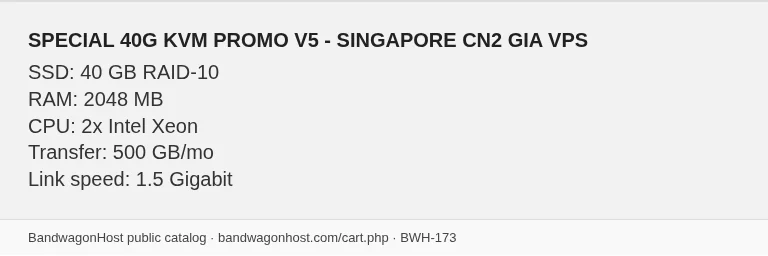
2 vCPU, 2 GB RAM, 40 GB storage, 500 GB monthly transfer and a 1.5 Gbps port. Consider Singapore for Southeast Asian deployments and compare it with Osaka and Hong Kong on the same budget.
Compare data centers, network routes, memory, traffic limits and billing. Use reviews and guides to choose a plan that fits your site and audience.
Compare memory, traffic and billing first. Check the plan detail for network and data-center conditions.
2 vCPU, 2 GB RAM, 40 GB storage, 500 GB monthly transfer and a 1.5 Gbps port. Consider Singapore for Southeast Asian deployments and compare it with Osaka and Hong Kong on the same budget.
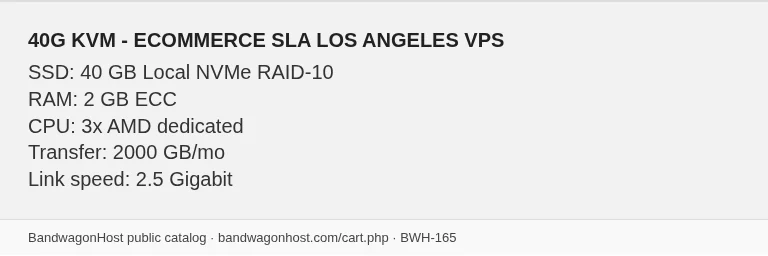
3 vCPU, 2,092 MB RAM, 40 GB storage, 2 TB monthly transfer and a 2.5 Gbps port. Consider this tier when a written service-level agreement matters. Check the actual agreement for credits, exclusions and claim procedures.
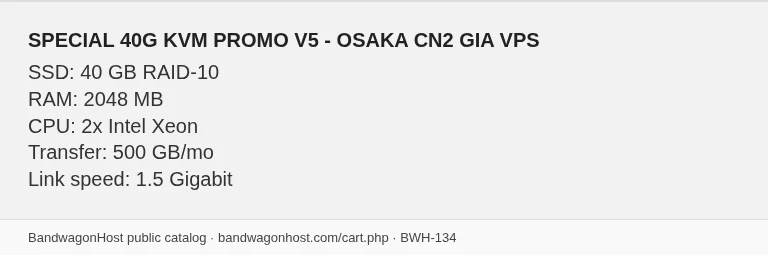
2 vCPU, 2 GB RAM, 40 GB storage, 500 GB monthly transfer and a 1.5 Gbps port. Osaka is an option for workloads requiring a Japanese location. Test both Osaka and Tokyo from your main audience networks before ordering.
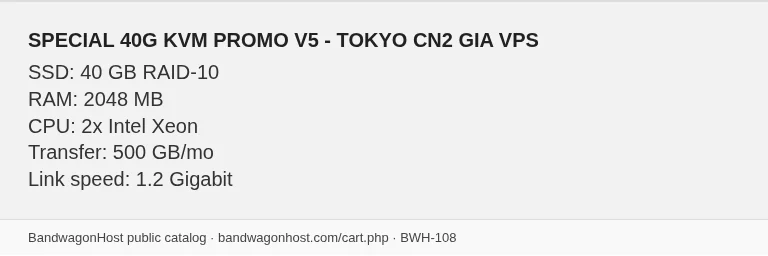
2 vCPU, 2 GB RAM, 40 GB storage, 500 GB monthly transfer and a 1.2 Gbps port. Tokyo is an option if your workload needs a Japanese location. Compare routes, monthly transfer and equal billing periods when weighing Tokyo against Osaka.
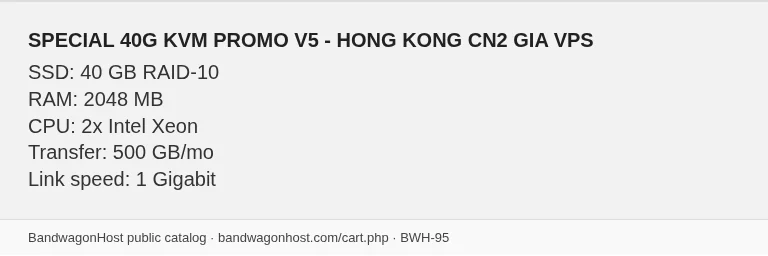
2 vCPU, 2 GB RAM, 40 GB storage, 500 GB monthly transfer and a 1 Gbps port. The Hong Kong location is an option for deployments focused on an Asian audience. Actual latency varies by local carrier and application.
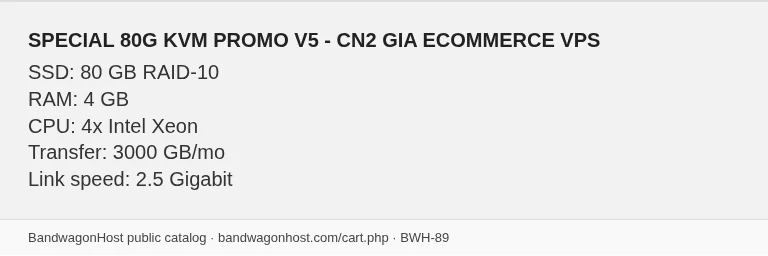
4 vCPU, 4 GB RAM, 80 GB storage, 3 TB monthly transfer and a 2.5 Gbps port. Consider this tier when cross-border connectivity matters. Carriers and both travel directions differ by facility, so test from the audience’s network.
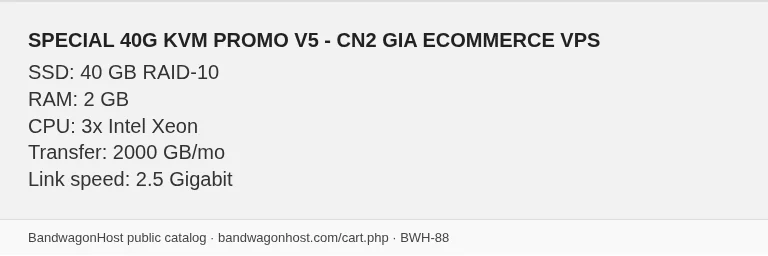
3 vCPU, 2 GB RAM, 40 GB storage, 2 TB monthly transfer and a 2.5 Gbps port. Consider this tier when cross-border connectivity matters. Carriers and both travel directions differ by facility, so test from the audience’s network.
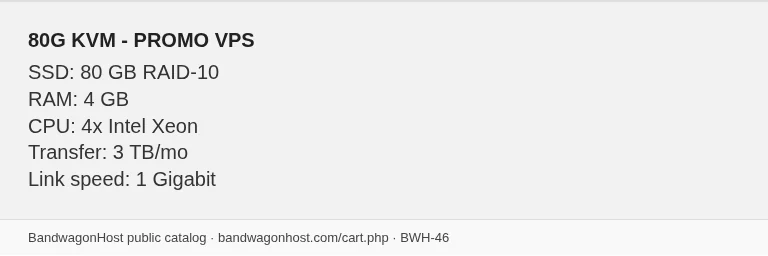
4 vCPU, 4 GB RAM, 80 GB storage, 3 TB monthly transfer and a 1 Gbps port. Consider it for learning, development and small sites where resource cost comes first. Test your audience’s routes before choosing a location.
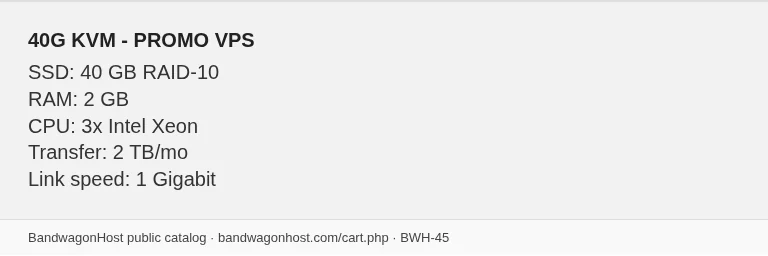
3 vCPU, 2 GB RAM, 40 GB storage, 2 TB monthly transfer and a 1 Gbps port. Consider it for learning, development and small sites where resource cost comes first. Test your audience’s routes before choosing a location.
Test from the places your visitors connect from. Plans in the same region can use different network routes.
Check the routes the plan lists, region-switching conditions and network notes.
Compare latency, packet loss and peak-hour behavior from your main audience regions.
Confirm how traffic is metered and reset, how overages work and what renewal costs.
Focus on memory, space for backups and the transfer costs of media-heavy pages.
Check operating systems, control panel access, snapshots, storage and reinstall options.
Prioritize the regions that send the most traffic when testing routes and data centers.
Compare published plans by resource limits and billing cycle. Plan details include source pricing, regions and related guides.
| Plan | Resources | Billing period | Listed price | Check current pricing |
|---|---|---|---|---|
| BandwagonHost Singapore CN2 GIA VPS 40 GB | 2 vCPU · 2 GB · 40 GB · 500 GB/mo | Monthly | THB 1,695.58 | Check current pricing |
| BandwagonHost Los Angeles E-Commerce SLA VPS 40 GB | 3 vCPU · 2,092 MB · 40 GB · 2 TB/mo | Quarterly | THB 3,968.11 | Check current pricing |
| BandwagonHost Osaka CN2 GIA VPS 40 GB | 2 vCPU · 2 GB · 40 GB · 500 GB/mo | Monthly | THB 1,695.58 | Check current pricing |
| BandwagonHost Tokyo CN2 GIA VPS 40 GB | 2 vCPU · 2 GB · 40 GB · 500 GB/mo | Monthly | THB 3,052.31 | Check current pricing |
| BandwagonHost Hong Kong CN2 GIA VPS 40 GB | 2 vCPU · 2 GB · 40 GB · 500 GB/mo | Monthly | THB 3,052.31 | Check current pricing |
| BandwagonHost CN2 GIA E-Commerce VPS 80 GB | 4 vCPU · 4 GB · 80 GB · 3 TB/mo | Monthly | THB 1,933.01 | Check current pricing |
| BandwagonHost CN2 GIA E-Commerce VPS 40 GB | 3 vCPU · 2 GB · 40 GB · 2 TB/mo | Quarterly | THB 3,052.31 | Check current pricing |
| BandwagonHost Basic KVM VPS 80 GB | 4 vCPU · 4 GB · 80 GB · 3 TB/mo | Monthly | THB 678.03 | Check current pricing |
| BandwagonHost Basic KVM VPS 40 GB | 3 vCPU · 2 GB · 40 GB · 2 TB/mo | Every six months | THB 1,797.33 | Check current pricing |
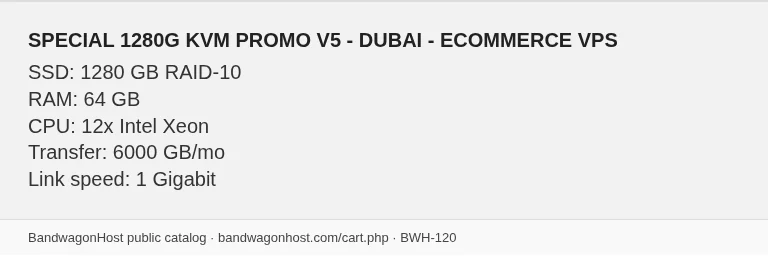
| BandwagonHost Dubai E-Commerce VPS 1280 GB | 12 vCPU · 64 GB · 1280 GB · 6 TB/mo | Annual | THB 183,158.90 | Check current pricing |
Compare prices, specs, regions and routes, then check current pricing at BandwagonHost.
12 vCPU, 64 GB RAM, 1280 GB storage, 6 TB monthly transfer and a 1 Gbps port. Dubai is a location to consider for a primarily Middle Eastern audience. The series may allow other cities. Check the location options on the order page.
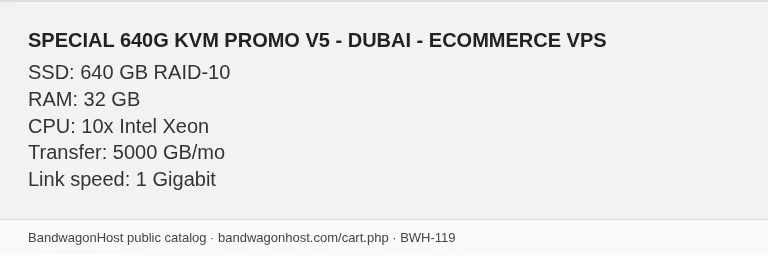
10 vCPU, 32 GB RAM, 640 GB storage, 5 TB monthly transfer and a 1 Gbps port. Dubai is a location to consider for a primarily Middle Eastern audience. The series may allow other cities. Check the location options on the order page.
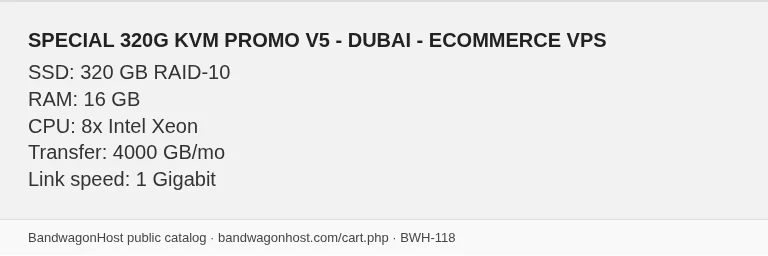
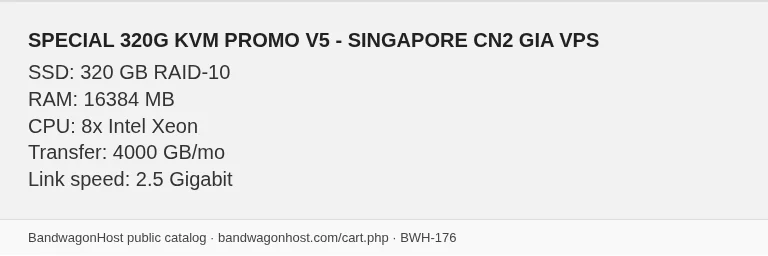
8 vCPU, 16 GB RAM, 320 GB storage, 4 TB monthly transfer and a 1 Gbps port. Dubai is a location to consider for a primarily Middle Eastern audience. The series may allow other cities. Check the location options on the order page.
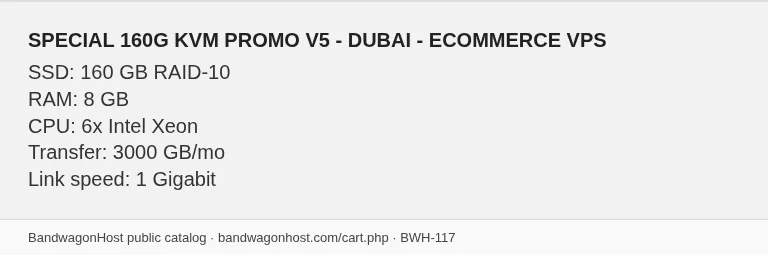
6 vCPU, 8 GB RAM, 160 GB storage, 3 TB monthly transfer and a 1 Gbps port. Dubai is a location to consider for a primarily Middle Eastern audience. The series may allow other cities. Check the location options on the order page.
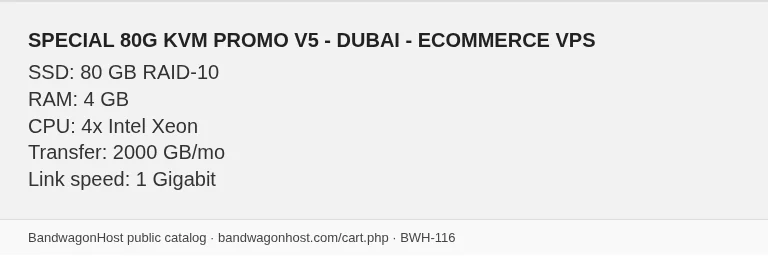
4 vCPU, 4 GB RAM, 80 GB storage, 2 TB monthly transfer and a 1 Gbps port. Dubai is a location to consider for a primarily Middle Eastern audience. The series may allow other cities. Check the location options on the order page.
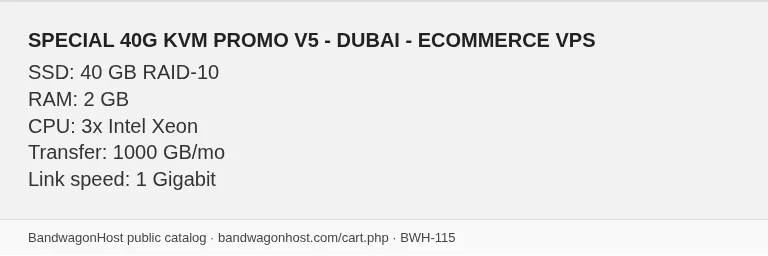
3 vCPU, 2 GB RAM, 40 GB storage, 1 TB monthly transfer and a 1 Gbps port. Dubai is a location to consider for a primarily Middle Eastern audience. The series may allow other cities. Check the location options on the order page.
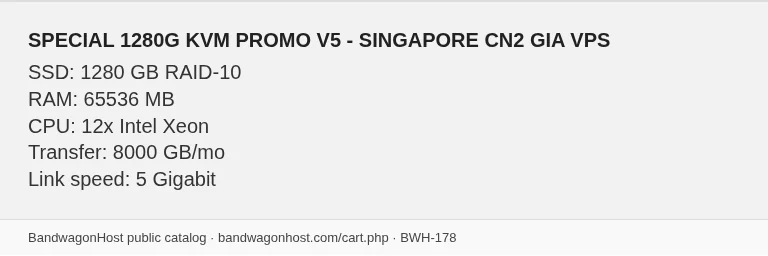
12 vCPU, 64 GB RAM, 1280 GB storage, 8 TB monthly transfer and a 5 Gbps port. Consider Singapore for Southeast Asian deployments and compare it with Osaka and Hong Kong on the same budget.
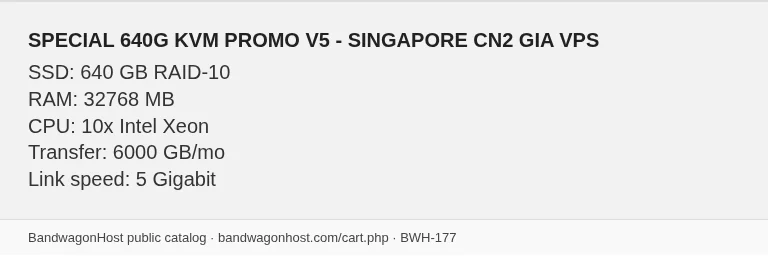
10 vCPU, 32 GB RAM, 640 GB storage, 6 TB monthly transfer and a 5 Gbps port. Consider Singapore for Southeast Asian deployments and compare it with Osaka and Hong Kong on the same budget.
8 vCPU, 16 GB RAM, 320 GB storage, 4 TB monthly transfer and a 2.5 Gbps port. Consider Singapore for Southeast Asian deployments and compare it with Osaka and Hong Kong on the same budget.
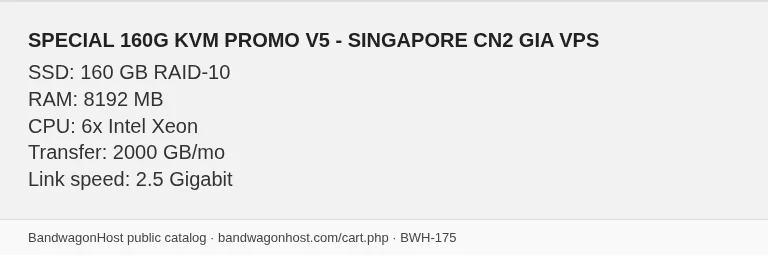
6 vCPU, 8 GB RAM, 160 GB storage, 2 TB monthly transfer and a 2.5 Gbps port. Consider Singapore for Southeast Asian deployments and compare it with Osaka and Hong Kong on the same budget.
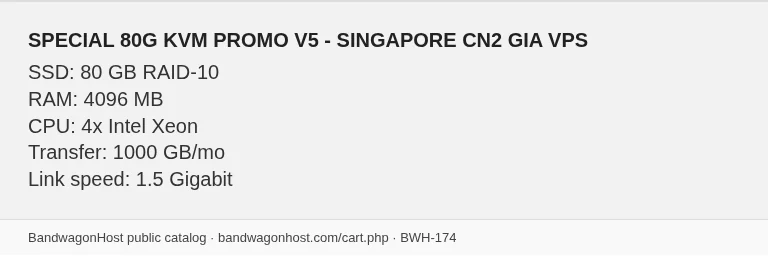
4 vCPU, 4 GB RAM, 80 GB storage, 1 TB monthly transfer and a 1.5 Gbps port. Consider Singapore for Southeast Asian deployments and compare it with Osaka and Hong Kong on the same budget.
2 vCPU, 2 GB RAM, 40 GB storage, 500 GB monthly transfer and a 1.5 Gbps port. Consider Singapore for Southeast Asian deployments and compare it with Osaka and Hong Kong on the same budget.
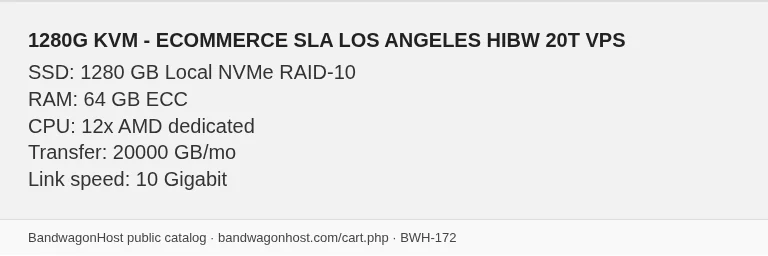
12 vCPU, 64 GB RAM, 1280 GB storage, 20 TB monthly transfer and a 10 Gbps port. Consider this tier when a written service-level agreement matters. Check the actual agreement for credits, exclusions and claim procedures.
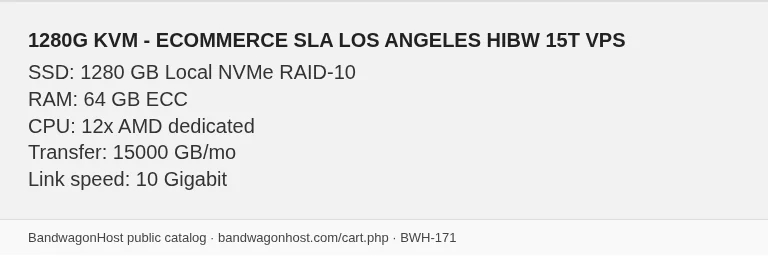
12 vCPU, 64 GB RAM, 1280 GB storage, 15 TB monthly transfer and a 10 Gbps port. Consider this tier when a written service-level agreement matters. Check the actual agreement for credits, exclusions and claim procedures.
Read about plan selection, routing conditions and practical use.
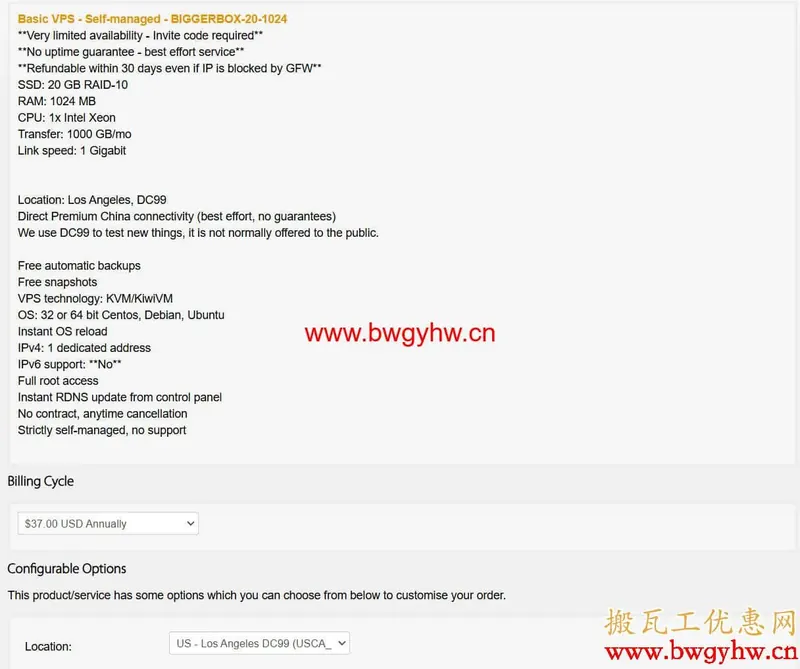
The archived BIGGERBOX plan lists 1 vCPU, 1 GB RAM, 20 GB SSD, 1,000 GB monthly transfer and a 1 Gbps port. DC99 and DC9 have similar names, with different identifiers, routing priorities and migration terms.
The historical MINICHICKEN configuration had 1 vCPU, 1 GB RAM, 20 GB SSD, 1,000 GB monthly transfer and a 1 Gbps port. It was tied to Fremont, and the source describes no location migration.
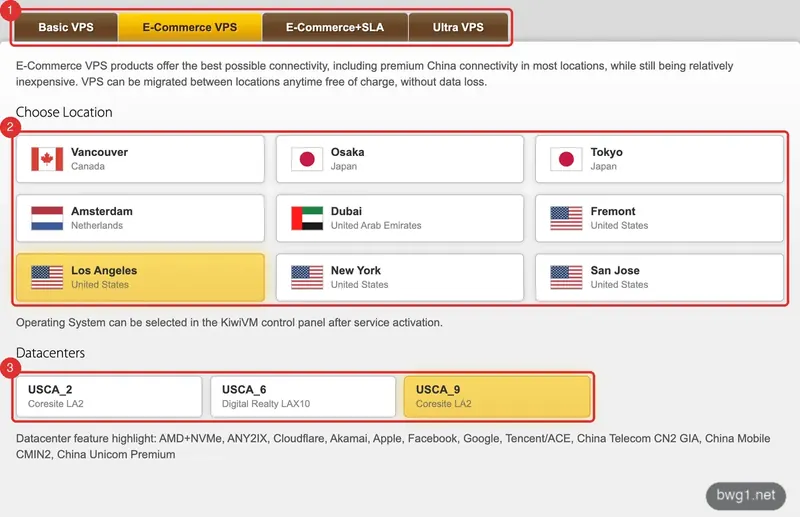
Basic prioritizes cost. E-Commerce supplies more cross-border routing choices. Ultra offers selected Hong Kong, Japan and Singapore configurations. The Los Angeles SLA line adds a written service-level agreement.
Leave memory for the system and database cache, and disk space for logs and updates.
Check the initial charge, renewal amount, billing period and promotion terms separately.
Keep the order number and check the activation email, account portal and refund or support procedures.
Visit BandwagonHost to see current plans, availability and applicable offers. Confirm pricing and offer terms at checkout.
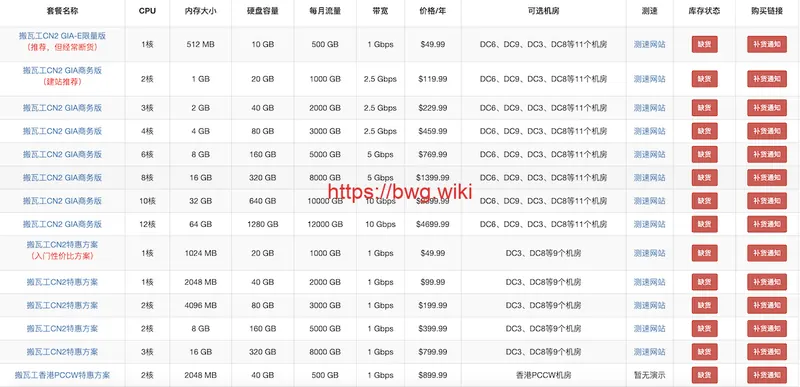
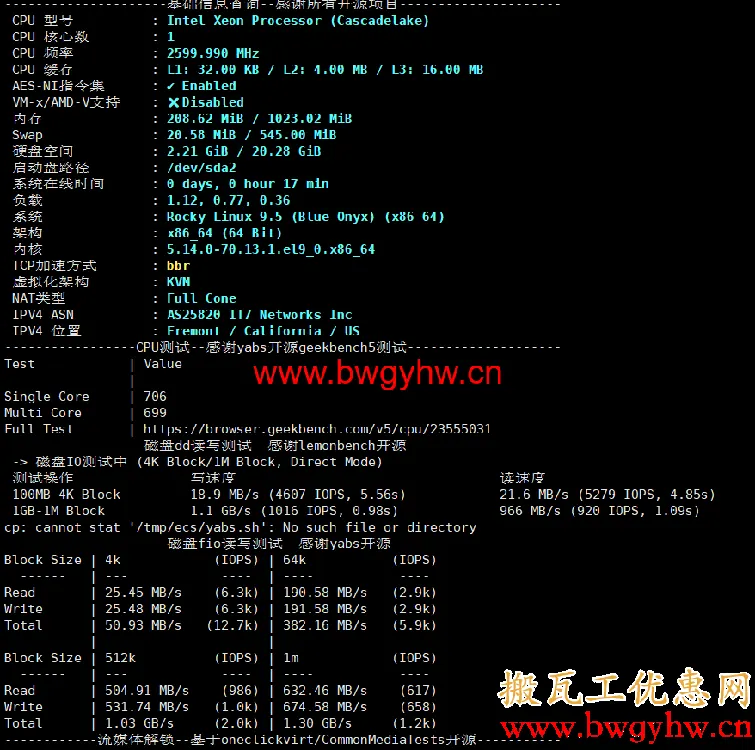
The official VPS page lists KVM virtualization, the KiwiVM panel and its facilities, along with operating systems and plan specifications.
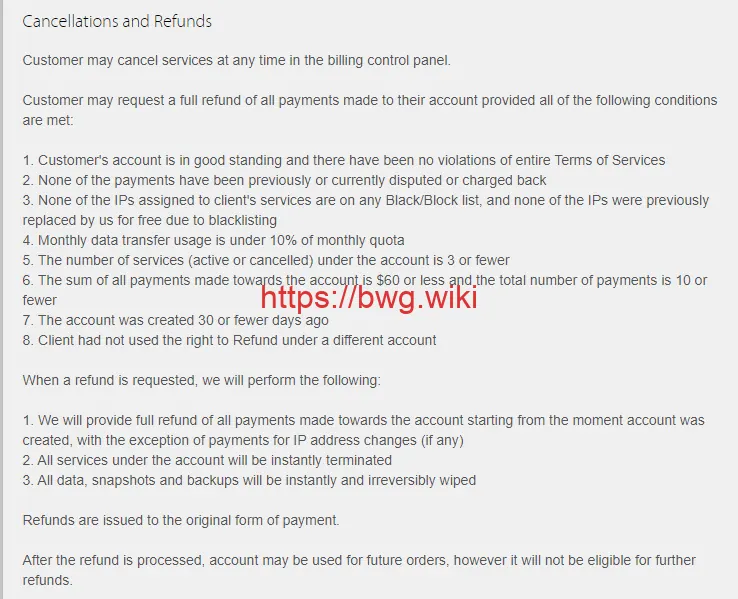
Check account standing, usage, purchase timing and other current eligibility terms. Historical tutorials can identify the questions to verify.
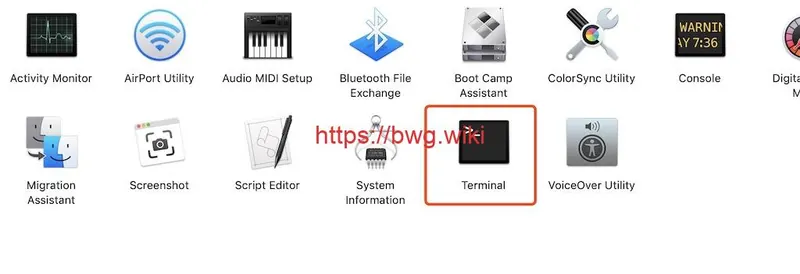
Find your own instance address, SSH port and permitted username in KiwiVM. Use the corresponding account from macOS Terminal and verify the host identity at the first connection.
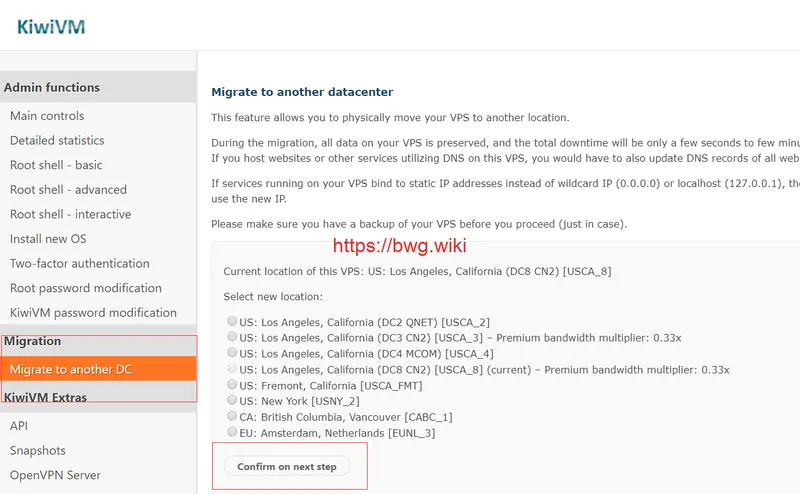
Prepare a maintenance window, backup and DNS plan before moving locations. The panel only shows destinations available to that instance.
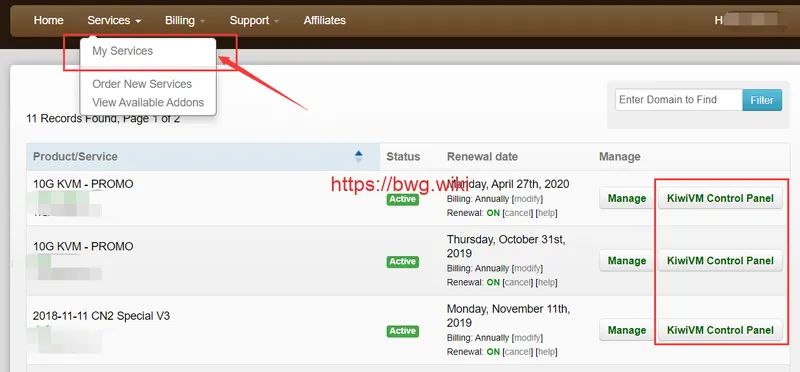
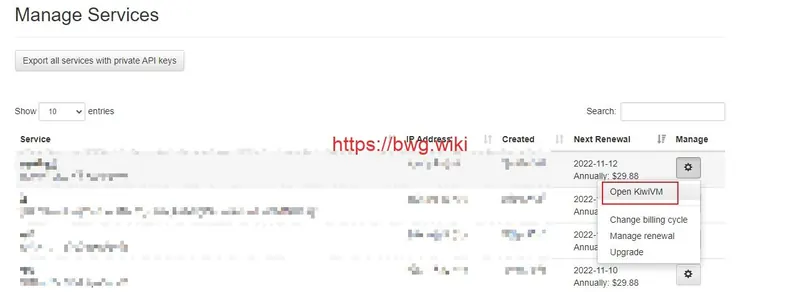
Use KiwiVM to check resources, transfer and power state. OS reloads, snapshots, migration tools and console access have their own controls according to service eligibility.
Historical notices describe the phaseout of OpenVZ renewals and the move toward KVM VPS hosting. Old images, operating constraints and data recovery differ across platforms.
Reinstalling typically overwrites the instance disk. Back up sites and databases, note the image, IP and access settings, then follow the control-panel steps.
An earlier stock report documented simultaneous shortages on several CN2 product lines. That historical event shows supply can vary. It does not establish current stock for any plan.
Find the buying, billing, networking and control-panel references relevant to your VPS.
Read about ordering, verification and activation.
Review invoices, billing periods, renewals and provider refund terms.
Region routing, latency and ways to measure both.
Reference locations, network routes and regional availability.
Read control panel, OS installation and snapshot guides.
Guides for account setup, control panels, networking and migration.
Browse region migrations, maintenance updates and changes.
After activation, confirm account and system access before putting the server into production.
Check order status, region, instance access and initial system details in the provider portal. Keep access information in a protected location.
Patch the operating system, set up access controls, install application dependencies and confirm available storage. Record key commands, configuration and versions.
Check pages, endpoints and certificates from representative audience locations. Compare quiet and peak hours and record latency or errors.
Store database and critical file backups separately and verify that you can restore them. Plan future updates and log retention.
Leave memory for the system and database cache, and disk space for logs and updates.
Check the initial charge, renewal amount, billing period and promotion terms separately.
Keep the order number and check the activation email, account portal and refund or support procedures.
Use these terms to compare capabilities and capacity. Verify the provider’s definitions and limits before you buy.
A virtual CPU allocation. Compare core count, workload requirements and any limits on sustained use.
The system, app and database share memory. Caches and background jobs can use extra capacity.
The stated interface speed. Real throughput also depends on routing, congestion and the remote endpoint.
The amount of data available per billing cycle. Check how ingress and egress are metered, resets and overage treatment.
A snapshot records the instance at a point in time. Store important files separately and verify that they can be restored.
Region identifies where the server is hosted. The route data takes to your audience is a separate consideration.
Follow plan changes, service notes and configuration guides.
Browse plans and buying resources by brand.
Match the provider’s order details, our buying guides and your own configuration notes to each stage.
Use the plan directory to check resources and billing periods. If a promotion is absent from current checkout, check whether the provider offers an alternative.
Shop BandwagonHostUse the provider account to verify order and activation details, initial system, control panel and recovery access.
Service DeliveryCheck the actual billing amount and service status, and confirm whether upgrades, migrations or cancellation affect your existing instance.
Shop BandwagonHostPlan pages show recorded prices. The provider’s checkout determines availability, renewal charges and the final total.
Start with your audience region. Compare routes, measured latency and peak-hour stability, then confirm which data centers the plan supports.
Use an offer or shopping button to visit BandwagonHost. Choose a plan and region, then verify the billing period and final price before you place your order.
Converted prices use the site’s saved rates for comparison. Check the provider checkout for the charged currency, taxes and payment methods.
Compare routes, traffic limits and billing periods, then visit BandwagonHost to check plans, availability and current offers.